
Rabies Has No Borders
Every year, about 59,000 people worldwide die from rabies — deaths that were almost entirely preventable. Rabies is virtually 100% fatal once symptoms appear, and it’s still one of the deadliest infectious diseases.
“Rabies does not respect geography. Yet it’s also one of the few diseases whose toll could be eliminated if prevention reaches the communities and animals that need it most,” said IVO Founder and CEO Eric Eisenman.
While it’s still a serious global health threat, some people may think it’s a problem confined to distant regions. The reality is different: rabies exists in the United States too.
Each year, an estimated 1.4 million people in the United States seek medical care after animal contact and undergo evaluation, and approximately 100,000 people receive rabies Post-Exposure Prophylaxis following a potential exposure. In September 2026, the U.S. Centers for Disease Control and Prevention issued a health advisory due to a nationwide increase in reported human rabies exposures.
And in California, where IVO’s headquarters is based, more than 200 animal rabies cases have been reported each year since 2016.
The lesson is simple: no country, no county and no community is immune.
This is a disease we share, and so is the responsibility to fight it.
Rabies spreads through the saliva of an infected animal, usually through bites or scratches, and can cross borders through the movement of people, trade and animals themselves.
Vaccinating animals and ensuring access to timely treatment can break the cycle of rabies transmission where it begins: at the community level.
This summer, IVO and its partner TAWESO responded to a regional rabies outbreak in Tanzania. Over 3,100 dogs and cats received rabies vaccination — and over 400 animals were spayed or neutered.
“The program is vital,” said TAWESO Executive Director Dr. Thomas W. Kahema. “It will prevent more loss of human and animal lives, and communities are becoming more aware of the situation and taking precautions.”
Access to veterinary care is a global health need, not a luxury. A treated animal in an underserved community interrupts transmission that could otherwise spread.
World Rabies Day — September 28 — is a reminder that ending rabies is a shared mission.
Stopping rabies anywhere protects people everywhere. Whether it's a regional outbreak in Tanzania or a detected case in California, the answer is the same: vaccination, treatment, education and access to care.
At International Veterinary Outreach, we believe every animal deserves care and every community deserves protection.
Want to help?
Join IVO, Dr. Kahema, and the TAWESO team in expanding access to veterinary care.
Donate today to help animals and communities thrive.
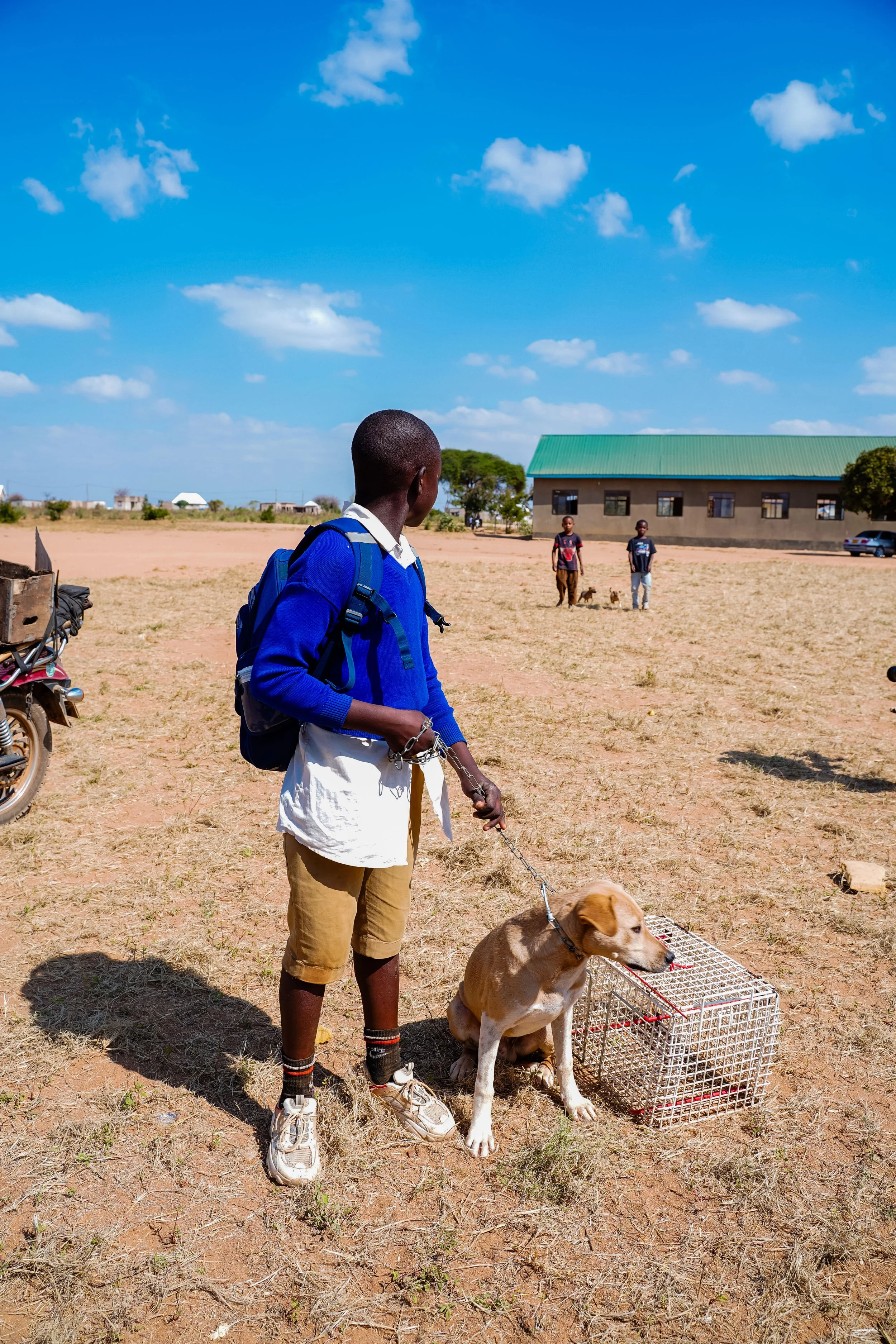
Children in Tanzania bring their dogs to receive rabies vaccinations.
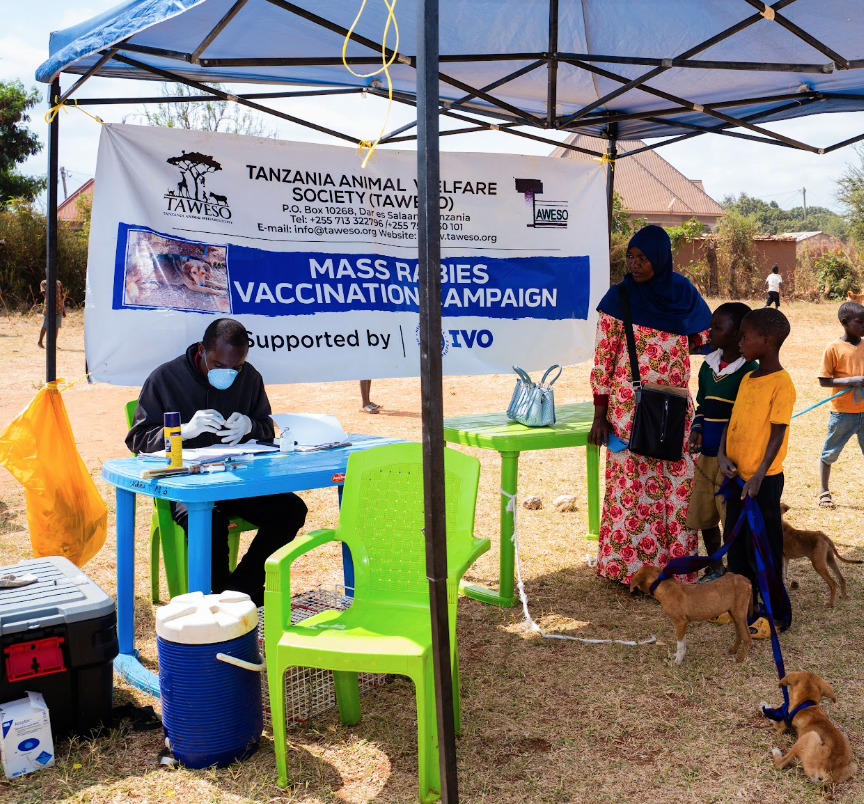
Community members wait with their dogs for rabies vaccinations.
